My Books

Yana's books

Whirligig
I Am Not Myself These Days
Eggs
Love, Stargirl
Stargirl
Harry Potter and the Sorcerer's Stone
The Sisterhood of the Traveling Pants
Everlost
The Shadow Club
The Miserable Mill
The Austere Academy
The Grim Grotto
The Bad Beginning
Number the Stars
The Giver
Go Ask Alice
The Lightning Thief
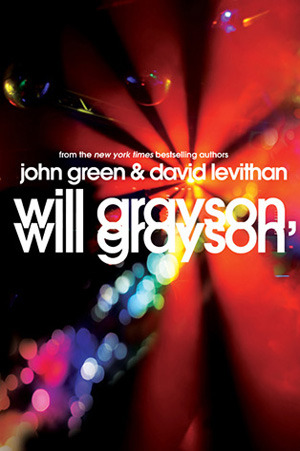
Will Grayson, Will Grayson
Marley and Me: Life and Love With the World's Worst Dog
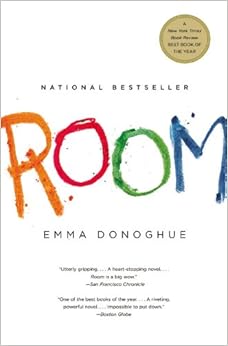
Room


Yana Artemov's favorite books »

Monday, December 8, 2014

Semester 1 Reflection

Wow! I can't believe the semester is almost over! I've done a lot of independent reading in the last few months, and with reading comes blogging. I have completed 3 novels, am almost finished with the one I am currently reading, and have started -but not finished- four books. (I guess you could say I'm picky. If I'm not completely engaged in the book by the halfway mark, I'll most likely end up putting it down.) I select my reading mostly by listening to recommendations from my friends, family, or the internet. The three novels I have completed are I Am Not Myself These Days by Josh Kilmer-Purcell, A Lovers Dictionary by David Levithan, and A Long Way Gone by Ishmael Baeh. The book I'm currently reading is Looking for Alaska by John Green. I thoroughly enjoyed all three books that I finished, as they all gave me a new perspective of life by teaching me to be myself, appreciate the little things, and to be grateful for what I have. In the novel I'm currently reading, there was a HUGE plot twist (which I'm thankful for, because I was just about to give up), and I can't wait to read on! 

I believe that my blog posts have improved a lot over the semester. I learned how to focus on my perspective of the novel, versus just summarizing the text in a few sentences and slapping on a rating. I have learned how to apply specific textual details to make my post stronger and add my own voice, making each post my own. For example, in my most recent one about Romeo and Juliet, I don't just say the scene we are currently studying and tell the reader if I like it or not. I go in detail about each element of Shakespeare's writing that I find interesting an explain why. 

Although I believe this semester has been a success in blogging and independent reading, I have set some goals for the next semester to help me grow even more. My first goal is to use more figurative language in my posts to help the reader visualize what I write more effectively. My second goal is to spend more time finding information that connects to my post and linking my reader to it, rather than just providing a picture of the book cover. My final goal is to step out of my comfort zone a little bit more with what I'm reading, such as choosing a challenging classic rather than re-reading a Harry Potter novel.

Saturday, November 22, 2014

Blog Post #10: Romeo and Juliet

We're studying Romeo and Juliet in class right now, and coming into this unit, I was very pessimistic. I was nervous about not being to understand the Elizabethan language and it's true meaning, and just not having a good time learning. But I was pleasantly surprised!

One of the things I really like about Shakespeare's writing style is that he uses iambic pentameter. Sometime's when we are reading the text, I stop at a certain line and count its syllables, trying to find one that doesn't have exactly ten... I always fail. For example, in Act 1, Scene 5, Romeo says "Did my heart love till now? Foresware it sight!" (1.5, 52). I stopped at this line in the play to count the syllables, and sure enough, there were ten. But nevertheless, I find it fascinating how Shakespeare has stayed consistent with this style of writing throughout the whole play! 

Another thing I really like about this play is that it is both a comedy and a tragedy. Since the two play styles are polar opposites, I never thought it would be possible to categorize a play in both genres. But Shakespeare was able to seamlessly combine the two styles in a way that engages the audience in a whole different way!

Finally, I have to say that I really enjoy watching the film adaptations of this play. Although I find the 1960's version a lot easier to follow, the 1990's version put a hilarious modern spin on the original which I also really enjoy! Check out the trailers to the two film adaptations below!


1968 Version


1996 Version

Sunday, November 16, 2014

Blog Post #9

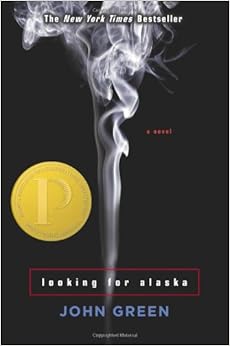
We're doing a book swap in English, and I decided to bring a book in, because why not? Since I brought in a book, I also got to pick one up from the pile! Looking for Alaska by John Green caught my eye. John Green is one of my favorite authors (and not just because of TFioS), so I couldn't wait to get into a new book of his.

This novel is about a 17-year-old boy named Miles,who leaves his family in Florida to go to a boarding school in Arizona to search for a "Great Perhaps.' At the school, he meets a Alaska Young, who he is immediately infatuated with. What I find interesting is that Alaska, although not the protagonist, seems like a more round character than Miles. She seems a lot more developed and I can already see the many sides she has to her.

So, do I like it? I'm not sure yet. It's a toss up, because finding out more and more about Alaska is what I find myself looking forward to every time I open this book, but so far, that's really it. No major events have happened that have propelled the plot so far, and I don't even know what the real conflict is yet. And being 55 pages into the book, I'm really hoping for some sort of twist! Otherwise, I'll be really disappointed with John Green this time. (No offence, John. You're still amazing.)

Have any of you read Looking for Alaska? If so, tell me your thoughts on it!... without spoilers of course. :)


Tuesday, November 4, 2014

Blog Post #8 : Multicultural Memoir

For my independent memoir, I have chosen to read A Long Way Gone by Ishmael Baeh, with Mckayla Peebles (blogger of the week hayooo). This memoir takes place in the 1990's in Sierra Leone Africa, during the civil war. The author of the memoir, Ishmael Baeh, tells the story of how he was forced to run from the war at the age of 12, recruited as a child soldier to fight for his country at the age of 14, and forced into doing terrible acts that no 12 year old should be capable of.


I found an article that I thought connected very well to this novel. This article covers the dangers of sexual abuse on young girls and the long-term psychological damage that can come from it, such as anxiety, depression, and post traumatic stress disorder. In A Long Way Gone, Ishmael recalls how he acted when he first got into the rehab facility, "The rebel boys drew out the few bayonets they had and rushed toward us. It was war all over again...As the boys rushed toward us, I threw the grenade, but the explosion was delayed. We leaped out from underneath the stoop where we had taken cover and charged into the open yard, where we began to fight." (135). The war greatly changed Ishmael as a person from who he was at the beginning of the book and lets you see the true dangers of using child soldiers in battle.


This book made me realize that the events of our lives shape us into who we are today. Life is about savoring the great moments, and learning to become stronger from the hard times. My question for you to consider: Has there ever been a major event in your life that has changed you as a person?

Saturday, October 18, 2014

Blog Post #7

    So this week, I've decided to blog about The Color Of Water. I am actually really enjoying this book! When I'm reading, I don't feel like it's a chore that I have to get done, just so I don't get in trouble. Sometimes I actually find myself looking forward to sitting down and reading a class novel! How crazy is that?!
    One of my favorite parts of this book is the importance of the title. When I first picked up this book, I was a bit perplexed looking at the cover. The Color of Water? Water is colorless! And that's exactly the point the author is trying to make. In Chapter 6, James is pestering Ruth with questions about the race of God:
    "A deep sigh.'Oh boy... God's not black. He's not white. He's a spirit.'
    'Does he like black or white people better?'
    "He loves all people. He's a spirit.'
    'What's a spirit?'
    'A spirit's a spirit.'
    'What color is God's spirit?'
    'It doesn't have a color.' she said. 'God is the color of water. Water doesn't have a color.'" (p.50-51)
When I read this, a light bulb went off in my head. The author just mentioned the title! It means that we are all the same in the eyes of God, and god loves everyone equally. He does not favor a certain race, he does not have a color. He is the color of water. That's the connection! After I made this connection, this book had a whole new meaning to me, and I became even more interested in what's gonna be revealed next! My question for you is, if you are reading or have read this book: What moment jumped out at you the most? Why?

Sunday, September 28, 2014

Blog Post #6

     So this week, I haven't gotten much further in Lets Explore Diabetes with Owls, but I have been wanting to blog about a different book. Over the summer, I read the book Will Grayson,Will Grayson by John Green and David Levithan. This novel is about how two boys with the same name (Will Grayson) but very different personalities meet through a series of peculiar events. The chapters alternate between the two boys, Will Grayson, a relatively quiet guy who is just trying to get high school over with, and will grayson, a simple, depressed teen who similar to Will Grayson just wants to get through high school without killing himself.
     
      You may have noticed that I didn't capitalize the second will graysons name. In the book, David Levithan writes wills point of view in lowercase letters. In an interview in the back of the book, he explains:
      
     "The reason my will writes in lowercase is simple - that's how he sees himself. He is a lowercase person."

     I think this is an interesting method of characterization. A simple change in the format can really add to the character. This made me think: Am I a lowercase person? Or an uppercase person? I think that personally, I am somewhere in the middle. I don't really feel like I stand out in a crowd, but I also don't feel like I "blend in". Of course, there are a lot more layers to lowercase and uppercase people, but my question for you is: Are you a lowercase or uppercase person? Why? 


Sunday, September 21, 2014

Blog Post #5

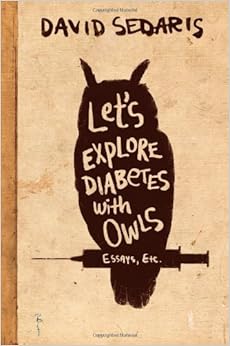
Book: Lets Explore Diabetes with Owls
Author: David Sedaris

     I'm about halfway done with this novel and I am really enjoying it! As I said in my last blog post, this book is a collection of narratives/essays about ordinary topics and events in the authors life. Going into this book, I didn't really know what to expect, as I had never read anything like this before, but I am pleasantly surprised! I was reading the reviews on the back and one of them really captured how I feel reading this book:
     "Quintessential Sedaris... Essays on everything from air travel to today's child-rearing techniques by a writer who's a master of pointing out the absurd in everyday life." -Craig Wilson, USA Today. 
      One reason I am really loving this read is because Mr. Sedaris is able to make mundane, everyday things comical and entertaining. He teaches his readers to appreciate the little things in life, and to pay closer attention to the world around them. I have discovered that there is a different theme in each chapter, as each chapter tells a different story. I like this because the reader can take away a countless number of lessons from this book and always finishes a chapter with a different thing to think about.


Sunday, September 14, 2014

Blog Post #4

Book: Let's Explore Diabetes with Owls
Author: David Sedaris

     I have recently began reading this novel and it is unlike anything I have ever read before. This book is a collection of short narratives by Mr. David Sedaris. This is a perfect book for me to be reading right now because it ties in well with our narrative unit, and I can use the styles of this author to help make my narrative more interesting.
   
     The structure of this book is very interesting. Each chapter is a different narrative, and each one doesn't relate to the previous in any aspect. For example, by just looking at the Table of Contents, you see that the first five chapters are the following:
  •  "Dentists Without Borders"
  •  "Attaboy"
  •  "Think Differenter"
  •  "Memory Laps"
  •  "A Friend in the Ghetto"
    I am very curious to see what kind of plot structure this book will have, or if it will even have a plot structure at all. So far, the book has been very humorous and I have really been enjoying this read. I can't wait to see how it turns out!

Sunday, September 7, 2014

Blog Post #3

Book: Go ask Alice
Author: Anonymous


     I am nearly finished reading Go Ask Alice, and it was a very gripping novel As said on the inside cover, his book is "based on the actual diary of a fifteen-year old drug user."
     This novel takes the reader on a first-person journey of how a normal girl, who lives an ordinary, happy life with her family, who ends up in the wrong place at the wrong time, getting served a drink laced with LSD. As the story goes on, you watch as her life starts spiraling downhill as she falls into the clutches of addiction.
     There are times when I am reading this book when I find myself getting extremely frustrated with the protagonist (who's name we never learn), and times when I want nothing more than to help her. The diary structure really engages the reader and makes this book a true page-turner. My rating for this book is 4.5 out of 5 stars, and I would recommend this novel to everyone.

Sunday, August 31, 2014

Blog Post #2

Book: I Am Not Myself These Days
Author: Josh Kilmer-Purcell

    I  recently finished this book and I have to say it's one of the best books I've ever read. It's also really weird. This book took me on a roller coaster of emotions; I laughed, I cried. There were times when I wanted to rip my hair out and times when I was smiling from ear to ear. It's about a man living in Manhattan who doesn't really know his place in this world, and his adventures with the people he meets. This book has a lot of metaphors that I had to go back and reread several times to fully understand them.
     After reading this book, I became a lot more open-minded and accepting. It also taught me to appreciate the little things in life. I wouldn't recommend this book to everyone though, because it made me think a lot, and some people like books that are more straight-forward.


Sunday, August 24, 2014

Blog Post #1 : Summer Reading

     Prompt B

     In Room by Emma Donoghue, the main character, 5-year-old Jack, needs to save his mother and himself after being kidnapped and forced to live in an 11x11 foot shed for 7 years. He has never been outside of the shed, which he calls Room. Since Room is all Jack has ever known, it is his whole world. Once Jack bravely and heroically saves himself and his mother, he has trouble adjusting to the outside world, since he was born in Room.
     Jack's interaction with other characters he meets is remarkable, as he is unfamiliar with social rules and everything seems alien to him. It's interesting to read from his limited point of view because it lets us see the world from a new perspective, and shines a new light on things we take for granted. Jack's interactions with the world around him take us through his journey and engage the reader, making this book a real page turner.

The following article is a New York Times review of Room. It is very thorough and I highly recommend reading it if you are interested in this novel.


The following is a short interview with the author of this novel as well as the opinions of The TV Book Club on the book.